01
Commercial demand audit.
We get a site visit on the calendar within a week, then assess your current system, gas supply, venting, mechanical room and peak demand.

Over 20 years of commercial tankless work across Greater Houston.
Restaurants, hotels and apartment complexes burn through hot water at a pace that would drain any residential system in minutes, and salons, spas and gyms swing from peak to idle. We design cascading tankless systems that heat water continuously, from 20-unit apartment buildings in Montrose to high-volume kitchens off Westheimer.

There is nothing to recover. Each unit heats 8 to 11 GPM continuously. Link three in a cascade and you produce 25 to 33 GPM of hot water for as long as you need it.
A 100-gallon commercial tank loses 15 to 20 percent of its energy keeping water hot overnight. A tankless burner fires only when someone opens a tap.
We pull the permits, coordinate gas meter upgrades with CenterPoint Energy and run semi-annual or quarterly maintenance for busy sites.
For hotels, it’s 6 to 9 a.m., when every guest wants a hot shower. For restaurants, it’s the dinner rush with three dishwashers running. For apartment buildings, it’s the 7 a.m. weekday crunch, when 40 tenants get ready for work at once. A tank stores hot water in advance, and when it runs dry, recovery takes 45 minutes to an hour.

Two to six or more commercial units link to one shared controller. When demand is low, only one unit fires; as it rises, more units come on in sequence. The controller rotates the lead unit, so no single unit ages faster than the others.
If one unit in a four-unit cascade needs repair, the other three keep running, so your business never loses hot water entirely. Try getting that from a single 200-gallon tank.
Restaurants typically need 140°F for sanitizing rinse cycles. Hotels need 120°F at guest fixtures, and laundromats can need 160°F for certain wash cycles. Incoming water here averages about 67°F on Rinnai’s groundwater map and runs colder in winter, so we size every system for worst-case winter conditions. Your peak performance in December matches June.
Most commercial properties still run oversized tank boilers that waste thousands of dollars a year keeping water hot that nobody is using. A standard 100-gallon commercial tank loses 15 to 20 percent of its energy just keeping water hot overnight. Nobody is using a drop, but the burner cycles on and off every 30 to 45 minutes, all night, every night. Multiply that across a restaurant running two 100-gallon tanks and you’re burning $300 to $500 a month in standby heat loss alone.
A tankless burner fires only when someone opens a tap, starts a dishwasher or runs a load of laundry. For a Houston restaurant doing 200 covers a night, that means gas savings of 30 to 40 percent, and for a 50-unit apartment complex the numbers are even more dramatic. The energy savings matter, but the real reason commercial properties switch is running out of hot water during peak hours, and losing business because of it: dishes piling up in a restaurant, angry guests in a hotel, maintenance complaints in an apartment building.
Health codes set dishwashing temperatures. A three-compartment sink needs 110°F for washing and 140°F for the final sanitizing rinse, and commercial dishwashers pull 2 to 3 GPM continuously during cycles. We design systems that hold those temperatures under full kitchen load, without the drops that trigger health inspection flags.
A 60-room Houston hotel at 85% occupancy on a Friday night might have 40 to 50 showers running between 6 and 8 a.m.: 80 to 100 GPM of demand in a two-hour window. We have designed cascade systems for boutique hotels in Montrose and extended-stay properties in the Energy Corridor that handle those peaks without a single guest complaint.
Central boiler systems in older Houston apartment buildings are expensive to maintain and inefficient by modern standards. We work with property managers to retrofit buildings with tankless systems, either a central cascade in the mechanical room or individual units for each apartment. The per-unit approach eliminates common hot water complaints and lets property managers bill hot water usage directly to tenants.
Demand swings widely. A salon might run six shampoo bowls at once during peak hours and none on a slow Tuesday morning. Tankless systems handle that better than any tank, because they scale output to real-time demand instead of keeping hundreds of gallons hot all day.
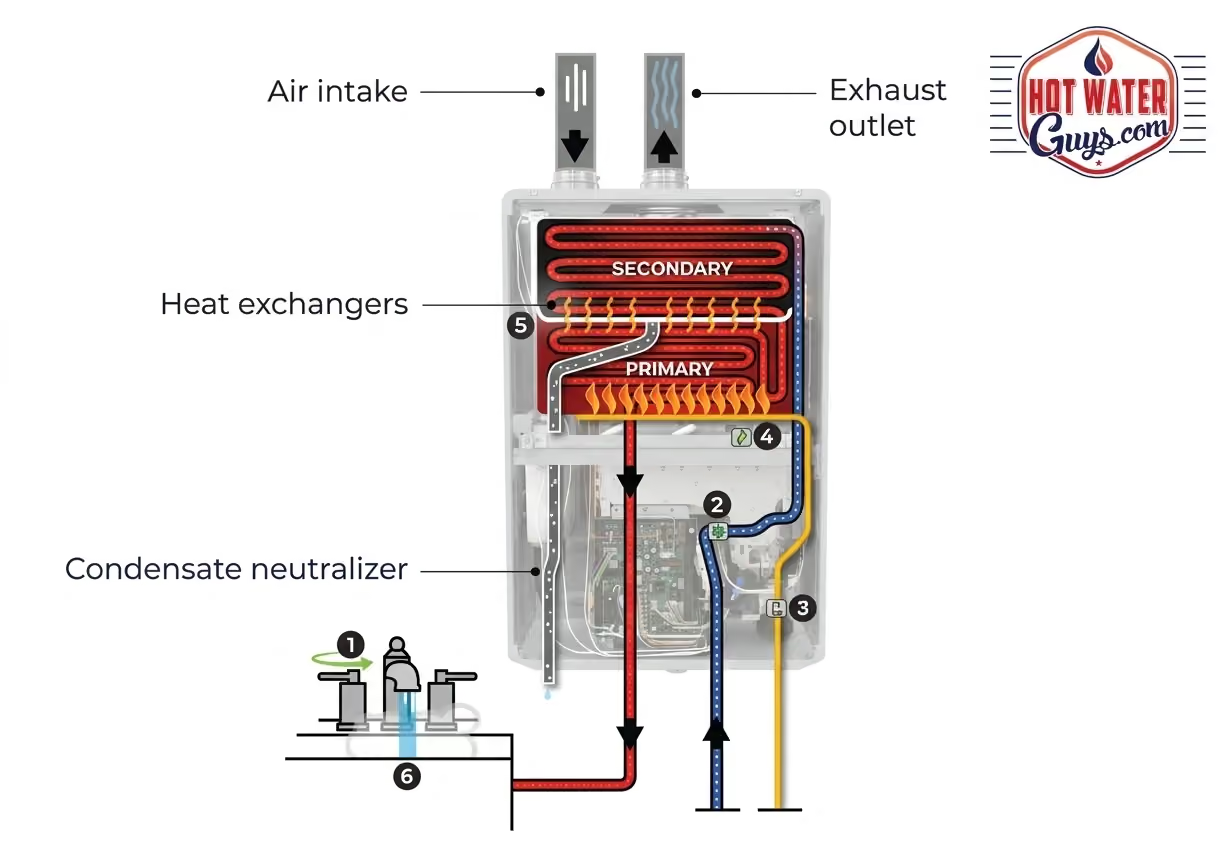
Non-condensing units run at about 80 to 85 percent thermal efficiency and lose 15 to 20 percent of the gas they burn as exhaust heat. Condensing units recapture that heat with a secondary heat exchanger and reach 95 to 98 percent. For a Houston restaurant running hot water 14 hours a day, the gap between 82% and 96% efficiency is worth $200 to $350 a month in gas, or $48,000 to $84,000 over the 20-year life of the system.
Condensing units typically cost $800 to $1,200 more per unit, and the payback is usually under 18 months in high-volume commercial applications. They are our default for commercial projects in Houston, unless the volume doesn’t justify the premium.
A unit’s turndown ratio is how low it can modulate its flame. At 10:1, it can run at 10% of its maximum BTU when demand is light. Without that range, a unit fires at full blast for a single hand-wash sink, overshoots the temperature, shuts off and fires again as the water cools. That short-cycling stresses the ignition system, the gas valve and the heat exchanger. Units that modulate smoothly run at just the output needed, with less stress, a longer life and lower repair costs.
Most commercial tankless units now include Wi-Fi and digital control panels. Property managers running several Houston locations can check water temperature, system status and error codes from a phone. If a unit throws a fault at your Galleria hotel at 2 a.m., you’ll know before your front desk does. On cascade systems, the controller also logs runtime for each unit, which helps us plan maintenance around actual use instead of a generic calendar.
Every commercial water heater installation in Houston requires a permit through the City of Houston or your local jurisdiction. We pull all permits, schedule the inspections and make sure your system passes on the first visit. Our license, insurance and bonding documentation is current and available to any property manager or landlord who needs it for their records.
Over 20 years of commercial work means we can walk into a restaurant mechanical room, look at the existing plumbing and know within 15 minutes exactly what the project will involve. Commercial installations fail for predictable reasons: undersized gas lines, insufficient combustion air, improper venting slope and cascade controllers that aren’t programmed correctly. We have been called in to fix other companies’ commercial installs more times than we can count.
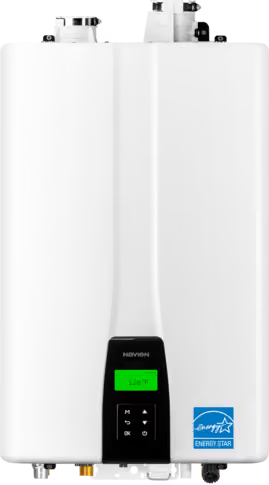
A property management group in the Heights hired us to troubleshoot a four-unit Navien cascade that had never worked properly since installation. The previous installer had used ½-inch gas lines where 1-inch lines were needed and had never configured the lead-lag rotation on the cascade controller. Three of the four units showed error codes within the first six months. We re-piped the gas supply, reprogrammed the controller and flushed all four heat exchangers. The system has run for two years without a single fault.
Priced after a site visit
No phone estimates for commercial work, because every building is different.
Commercial tankless installation in Houston involves significantly more complexity than residential work: bigger gas supply requirements, more elaborate venting and a permit process that needs detailed documentation. A three-unit cascade at 199,000 BTU per unit draws nearly 600,000 BTU. That typically requires a dedicated 1.5-inch gas line and often a meter upgrade through CenterPoint Energy. We request the upgrade and coordinate with CenterPoint for you. It can take 2 to 4 weeks, so it is in the project timeline from day one.
Commercial units in Houston must vent outside through approved Category III or Category IV stainless steel venting, depending on whether they are non-condensing or condensing. Interior mechanical rooms need adequate combustion air, which often means adding dedicated air intakes. We have seen installations fail inspection because the mechanical room door was sealed too tightly. We calculate the air requirements before we start and verify them during installation.
The proposal comes with no obligation and no high-pressure sales: a clear plan and a firm number from a team that has done this hundreds of times across Houston. Call 832-673-0909 or use our contact page.
Every commercial project starts with a site visit, and we typically complete installations in 1 to 3 days, depending on the scope.
We get a site visit on the calendar within a week, then assess your current system, gas supply, venting, mechanical room and peak demand.
Within 48 hours you get a proposal with equipment specifications, installation scope, permit fees, timeline and total cost.
Permits, inspections, gas supply and venting, typically completed in 1 to 3 days. Larger retrofits with meter upgrades may take longer because of utility scheduling.
We commission the system, train your staff or maintenance team on basic operation and set up your maintenance schedule.
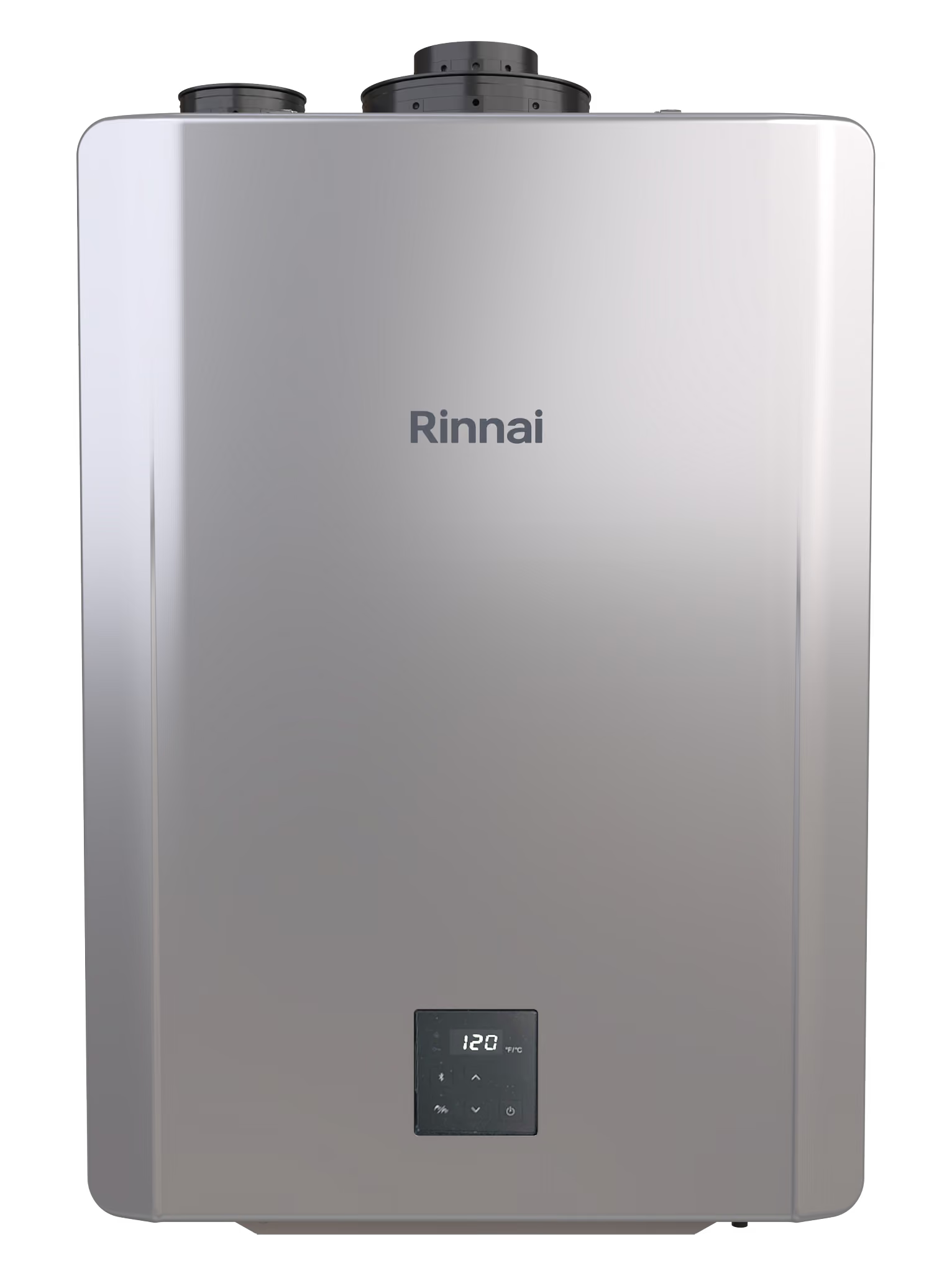
The commercial Rinnai and Navien units we install have turndown ratios between 10:1 and 17:1, enough to handle anything from a trickle at a bar sink to a full kitchen running three dishwashers.
Condensing models with 95%+ thermal efficiency are our default in Houston. Each unit heats 8 to 11 GPM, and multi-unit cascades support high flow rates, up to 20+ GPM. Commercial work is backed by commercial-grade coverage for heat exchangers and professional labor warranties.
A restaurant tankless system running 14 hours a day in Houston’s hard water needs more frequent maintenance than a home unit running 2 to 3 hours. We offer semi-annual and quarterly programs that cover descaling, filter cleaning, gas pressure checks, venting inspection and a burner assembly evaluation.
We recommend semi-annual flushes for restaurants and hotels. For apartment buildings with lower demand per unit, annual maintenance usually suffices. Commercial maintenance starts at $225 per visit for a single-unit system and scales with the number of units and access. Every visit includes a written service report that satisfies manufacturer warranty requirements and documents the system for property audits.
Confirm the service address and project with the team. Some areas are subject to an additional travel fee.
Endless hot water, energy savings and space efficiency, which makes them ideal for commercial properties with high hot water demand. Tankless units also last longer than traditional water heaters.
Depending on the hot water demand, several tankless water heaters can be installed in parallel, so the system can handle simultaneous use from many fixtures. A single residential unit maxes out around 199,000 BTU and 10 GPM.
Yes. Regular maintenance is crucial: descaling, checking the burners or heating elements and making sure the venting works properly. It helps prevent breakdowns and extends the life of the system. We offer semi-annual and quarterly programs, starting at $225 per visit for a single-unit system.
They only heat water on demand, which cuts the energy a tank wastes keeping water hot. That efficiency means significant savings on utility bills, especially for businesses with high hot water use. A standard 100-gallon commercial tank loses 15 to 20 percent of its energy just keeping water hot overnight.
Your hot water demand, the number of fixtures, the fuel type (natural gas, propane or electric) and the specific requirements of your property. A professional consultation helps you find the best system for your needs. For commercial work, we always start with a site visit, because every building is different.
We’ll visit the site, size the system to that peak and send a proposal with the total cost within 48 hours.