Tankless Water Heater Installation
in Houston.
Switching to a tankless water heater is one of the smartest upgrades a Houston homeowner can make. From endless hot water and lower energy bills to a compact design that frees up valuable space, tankless systems deliver comfort and efficiency that traditional tanks simply can't match. At The Hot Water Guys, we specialize in professional tankless water heater installation across Harris, Galveston, Brazoria, Ft Bend, Montgomery, Liberty, and portions of Waller and Chambers Counties. With thousands of five-star reviews and over two decades of experience, we're Houston's go-to team for tankless.
.webp)


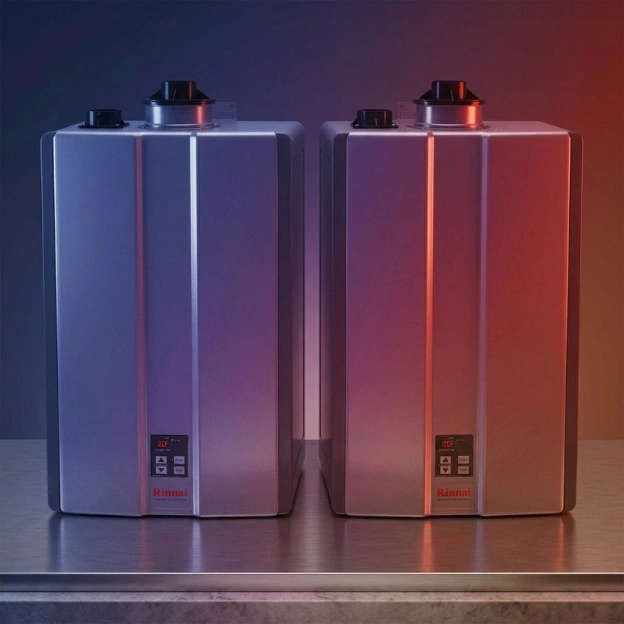

tankless water heaters
What Is a Tankless Water Heater and How Does It Work?
A tankless water heater -also called an on-demand water heater- heats water directly as it flows through the unit, without the need for a storage tank. When you open a hot water tap, cold water passes over a gas burner or electric heating element and reaches your desired temperature in seconds. Because there's no reservoir of water being heated around the clock, tankless systems eliminate standby heat loss, which is one of the biggest sources of wasted energy in traditional tank setups.
- Heats water on demand using gas or electric elements, delivering hot water only when you need it
- Eliminates the standby energy loss that accounts for a significant portion of a traditional tank's operating cost
- Available in whole-house and point-of-use configurations to fit homes of every size
- Can be powered by natural gas, propane, or electricity depending on your home's infrastructure and hot water demand
- Typically lasts 15 to 20 years with proper maintenance, nearly double the lifespan of a conventional water heater
- Modern units from leading manufacturers like Rinnai, Navien, and Rheem feature built-in recirculation, Wi-Fi diagnostics, and high energy-factor ratings
- Ideal for Houston homes dealing with hard water, high humidity, and year-round demand for hot water
professional installation
What Goes Into a Tankless Water Heater Installation?
Installing a tankless water heater is more involved than a simple tank swap. Proper installation requires evaluating your home's gas line capacity, venting requirements, electrical needs, and hot water demand to ensure the system performs at its best. That's why working with a licensed, experienced installer matters -especially in Houston, where local building codes, hard water conditions, and summer peak demand all affect system sizing and placement.
- Assessment of your household's peak hot water demand (measured in gallons per minute, or GPM) to select the right unit size
- Gas line evaluation and, if necessary, upsizing to support the higher BTU output that tankless systems require
- Professional venting installation -gas tankless water heaters need either direct vent or power vent configurations that meet local code
- Electrical work for units that require dedicated circuits or for electric tankless installations from brands like Stiebel Eltron
- Condensate drain routing for high-efficiency condensing units, which extract more heat and produce acidic condensate
- Water line connections and, where applicable, integration with recirculation systems for instant hot water at every fixture
- Permitting and inspection coordination with local authorities -The Hot Water Guys handles this from start to finish
- Full system testing and homeowner walkthrough so you understand your new tankless water heater's controls and maintenance needs
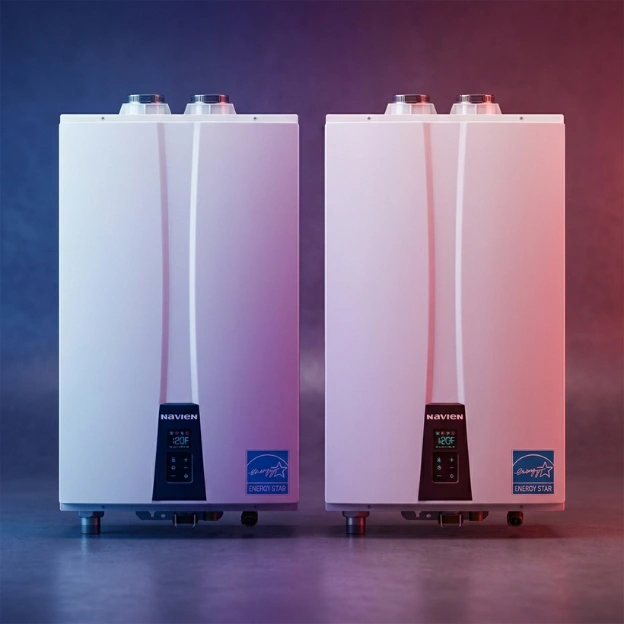
Our services.


Why Choose a Tankless Water Heater?
Tankless water heaters, also known as on-demand water heaters, have become an increasingly popular choice for homeowners looking to improve energy efficiency and overall convenience. Unlike traditional storage tank systems that continuously heat and reheat water, tankless units heat water only when it’s needed. This fundamental difference leads to several compelling advantages.
One of the most significant benefits is energy savings. Traditional water heaters maintain a reservoir of hot water throughout the day, which leads to standby heat loss -energy wasted as the water cools and is reheated repeatedly. Tankless systems eliminate this inefficiency by heating water instantly as it flows through the unit. As a result, households can see noticeable reductions in their energy bills over time. While the exact savings depend on usage patterns, tankless systems are generally more efficient, especially in homes with moderate water consumption.
Another major advantage is the ability to enjoy endless hot water. With a storage tank, once the hot water runs out, you have to wait for the tank to refill and reheat -a frustrating experience during back-to-back showers or heavy appliance use. Tankless water heaters solve this problem by delivering a continuous supply of hot water on demand. Whether you’re running multiple showers, doing laundry, or washing dishes simultaneously, a properly sized tankless system can keep up without interruption.
Space-saving design is another reason many homeowners make the switch. Traditional water heaters often require a large tank that takes up valuable floor space in basements, utility rooms, or closets. In contrast, tankless units are compact and can be mounted on a wall, freeing up room for storage or other uses. This makes them particularly attractive for smaller homes, apartments, or anyone looking to maximize usable space.
Longevity is also a key factor to consider. Tankless water heaters typically have a longer lifespan than conventional tank models. While traditional units may last around 8 to 12 years, tankless systems can often operate efficiently for 15 to 20 years or more with proper maintenance. Additionally, many components in tankless units are replaceable, which can further extend their service life and reduce long-term costs.
Finally, there are potential financial incentives that can make tankless systems even more appealing. Many regions offer rebates, tax credits, or other incentives for installing energy-efficient appliances, including tankless water heaters. These programs can help offset the initial investment, which is usually higher than that of a traditional water heater. Over time, the combination of lower energy bills and available rebates can make tankless systems a cost-effective choice.
In summary, tankless water heaters offer a modern, efficient, and convenient solution for today’s households. With benefits such as reduced energy consumption, continuous hot water, space efficiency, longer lifespan, and potential rebates, they represent a smart upgrade for homeowners seeking both comfort and long-term value.
Tankless vs. Tank Water Heater Comparison
Heats water on demand with no standby heat loss. Gas models typically achieve 80–98% energy factor ratings, and electric tankless units can approach 99% efficiency.
Continuously heats and reheats stored water, leading to standby heat loss. Standard gas tanks average 60–70% energy factor ratings.
Delivers a continuous, unlimited supply of hot water as long as demand stays within the unit's GPM capacity. No waiting for a tank to refill.
Limited to the capacity of the storage tank (typically 40–50 gallons). Once depleted, a full recovery can take 30–60+ minutes.
15 to 20+ years with routine maintenance such as annual flushing and descaling, especially important in Houston's hard water conditions.
8 to 12 years on average. Sediment buildup from Houston's mineral-heavy water can shorten lifespan further without regular draining.
Compact, wall-mounted units roughly the size of a carry-on suitcase. Frees up valuable floor space in utility closets, garages, and attics.
Requires dedicated floor space for a 40- to 50-gallon cylinder. Typically installed in a garage, attic, or utility closet.
Higher initial investment (typically $4,500–$8,500 installed) due to unit cost, potential gas line upgrades, and venting requirements. Federal and local rebates may offset cost.
Lower upfront cost (typically $2,500–$4,500 installed). Simpler installation with fewer infrastructure modifications required.
Annual flushing recommended (essential in hard water areas like Houston). Filter cleaning and descaling keep the unit running at peak efficiency. Most maintenance can be handled in under an hour.
Periodic anode rod inspection and sediment flushing recommended. Neglected maintenance leads to corrosion and premature failure.
Lower monthly energy bills due to elimination of standby heat loss. Typical savings of 24–34% on water heating costs compared to standard tank systems (DOE estimates).
Higher ongoing energy costs from continuous heating. Water heating accounts for roughly 20% of the average home's energy bill.
in just 3-easy steps we help you achieve comfort and efficiency through reliable hot water services.
%402x.svg)
contact us for an estimate over the phone
%402x.svg)
schedule a site visit
%402x.svg)
schedule the installation
Frequently Asked Questions About Tankless Water Heaters
A tankless water heater heats water directly as it flows through the unit rather than storing it in a tank. When a hot water tap is opened, cold water travels through a pipe into the unit where a gas burner or electric element heats it on demand. This means you get a continuous supply of hot water without waiting for a storage tank to fill and reheat. The system only uses energy when hot water is being drawn, which is why tankless models are significantly more efficient than traditional tanks.
The total cost of a tankless water heater installation in Houston typically ranges from $4,500 to $8,500, depending on the unit selected, fuel type (gas, propane, or electric), and any infrastructure upgrades your home may need -such as gas line resizing or new venting. While the upfront investment is higher than a tank system, the long-term energy savings, longer lifespan, and potential rebates often make tankless the more cost-effective choice over time. The Hot Water Guys provides free, no-obligation quotes with transparent pricing.
The right size depends on two factors: the number of fixtures and appliances you want to run simultaneously, and the temperature rise needed (the difference between incoming water temperature and your desired output). In Houston, groundwater temperatures average around 70°F, which means less temperature rise is required compared to northern climates -giving your tankless unit more available capacity. A typical three-bathroom Houston home usually performs well with a unit rated at 8–10 GPM for gas or a properly sized electric system. Our team evaluates your specific household demand during every consultation.
Most tankless water heaters last between 15 and 20 years with proper maintenance, which is nearly double the 8- to 12-year average for traditional tank models. In Houston, regular descaling and flushing are especially important due to the area's hard water, which can cause mineral buildup inside the heat exchanger. With annual tankless water heater maintenance, many units exceed the 20-year mark. Additionally, individual components like heat exchangers and igniters are replaceable, which can further extend the system's life without a full replacement.
For most Houston homeowners, yes. The combination of lower monthly energy bills (typically 24–34% savings on water heating costs), a significantly longer lifespan, and the elimination of tank-related flood risk makes tankless a strong investment. Houston's warm groundwater temperatures also mean your tankless unit doesn't have to work as hard to reach your desired temperature, improving overall efficiency even further. Federal energy tax credits and local utility rebates can also reduce the upfront cost, making the payback period shorter than many homeowners expect.
In Houston, we recommend flushing your tankless water heater at least once a year -and every six months if your home has particularly hard water or no water softener. Flushing removes mineral scale buildup from the heat exchanger, which maintains heating efficiency and prevents long-term damage. Most homeowners can perform a basic vinegar flush themselves with a pump and two hoses, or you can schedule a professional tankless water heater maintenance visit with our team to handle it quickly and thoroughly.
Request your free quote.