01
Talk through your demand.
We go over your fixtures, their flow rates and how many run at the same time. That peak is what the new system has to meet.

More than 1,400 tankless installations across Greater Houston.
A tank keeps 40 to 75 gallons hot around the clock, whether anyone needs it or not. A tankless unit fires only when you open a hot water tap. As Houston’s top-rated tankless installers, we size every system to your home’s real demand and put the price in writing before work starts.
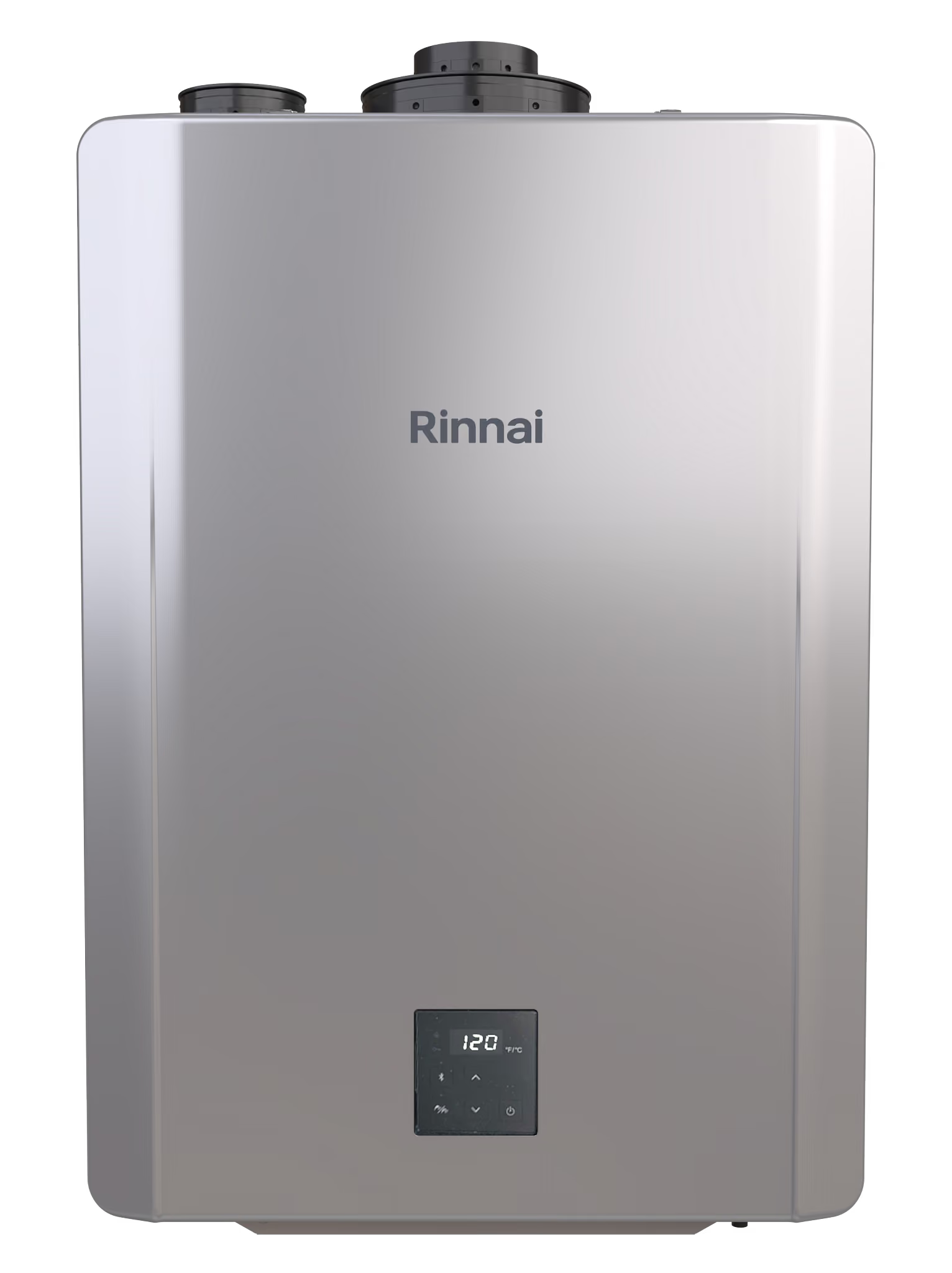
Water heats as it flows through the unit, so there is no tank to run dry. Every unit has a maximum flow, which is why sizing comes first.
Heating water only when you use it means tankless can be 24 to 34% more efficient on average for homes that use 41 gallons or less of hot water a day.
Units mount on a wall, indoors or outdoors. That frees floor space and avoids the 140°F summer attics that shorten tank lifespans in Houston.
The single most important factor in a successful tankless installation is proper sizing, more than the brand on the box. That comes down to the flow your home needs at its busiest moment, at Houston’s water temperature, and we calculate it for every installation.

Peak demand depends on how many fixtures you have, their flow rates and how many could realistically run at the same time. That peak is what the system has to meet.
We use the Delta T method. Incoming water here averages about 67°F on Rinnai’s groundwater map, and the seasons shift it. Heating it to the usual 120°F takes a 53°F rise. A unit sold as “10 GPM” might deliver only 6.5 GPM at that rise: the difference between a whole house running at once and taking turns in the shower.
A 199,000 BTU tankless unit needs roughly five times the gas of a standard 40,000 BTU tank. Most Houston homes need the line from the meter upgraded from ½-inch to ¾-inch pipe, and some older homes with longer gas runs may need a full 1-inch line.
A tank water heater works like a thermos. It keeps 40 to 75 gallons warm all day and reheats them every time they cool down, whether you need hot water or not. That is like leaving your car running in the driveway around the clock, just in case you need to drive somewhere. It is also why tanks often run out of hot water at peak times while wasting energy on water nobody is using.
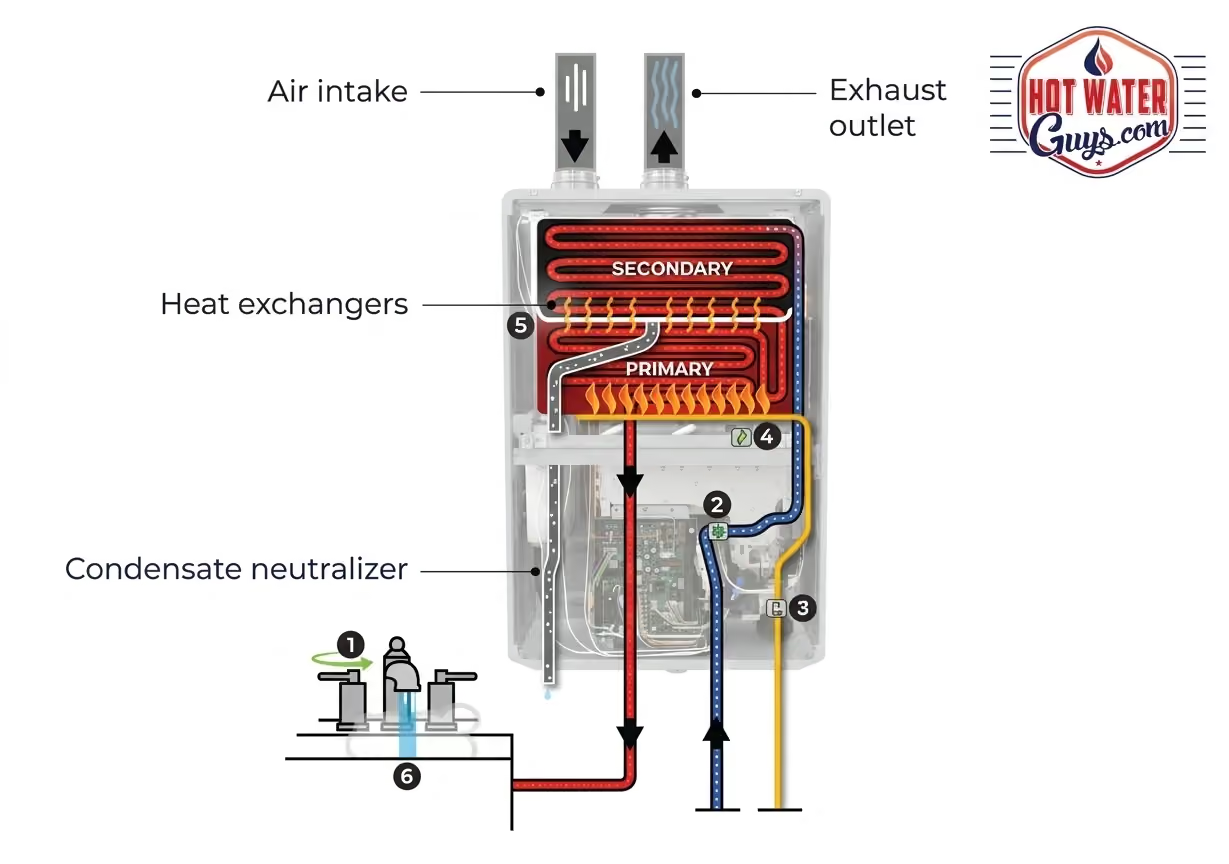
A tankless unit works like an instant coffee maker. Cold water enters through an inlet pipe and passes over a heat exchanger, which is essentially a series of tightly coiled copper or stainless steel fins. A gas burner or electric element heats those fins to extreme temperatures, and the water absorbs the heat almost instantly as it flows through. The unit only fires up when you open a hot water tap.
Heating water only when you use it cuts energy waste by 24 to 34%. A properly sized unit delivers unlimited hot water while cutting your gas bill by 30% or more. Houston adds another reason: our attics regularly hit 140°F in summer, which speeds up tank corrosion and sediment buildup. A wall-mounted tankless unit frees floor space and stays clear of that heat.
After more than 1,400 installations, the regret we hear most is “I wish I’d switched sooner.” Two of our most requested install areas are Katy and The Woodlands.
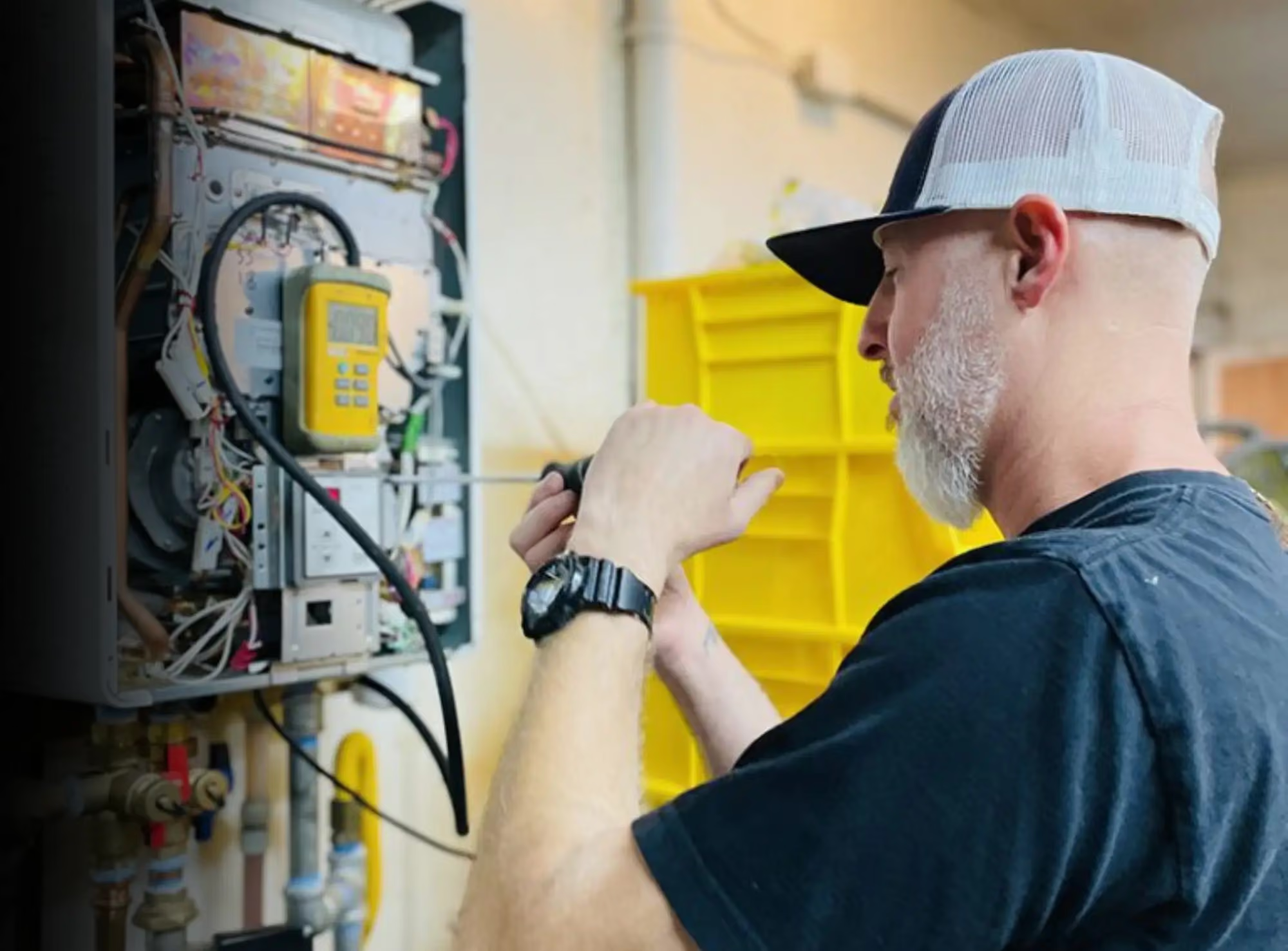
Going from a tank to tankless means upgrading the gas line, adding proper venting and often changing the water connections. That is why hiring a specialist matters. Our team handles every part of it: permits, gas line upgrades, venting, removal of the old tank and a complete system calibration. Most installations are finished in a single day.
An undersized gas line starves the burner. The result is intermittent shutdowns, error codes and inconsistent water temperatures. It is the most common reason behind “my tankless doesn’t work right” complaints online, and it is almost always an installer shortcut rather than a product defect. We include a gas line evaluation and any upgrade in every installation quote, so there are no surprises.
Here’s something most installers don’t mention: we register your warranty with the manufacturer on the day we install the unit. Coverage then starts from a documented installation date by a licensed professional, instead of whenever someone remembers the online form six months later. We also keep copies of your maintenance records on file, so the documentation is ready if you ever need to make a warranty claim.
Unit + installation
Published Hot Water Guys range. Your written quote confirms the final scope.
The heater you choose, how complex the installation is and any upgrades to your plumbing, venting, gas supply or electrical service decide where you land between $4,200 and $8,000. A tank-to-tankless conversion means upgrading the gas line and adding venting, and often changing water connections.
Call 832-673-0909 for a straight answer over the phone. A site visit lets us confirm the setup, and you get a detailed quote in writing before the installation is scheduled. No surprises, no hard sell. Just two decades of Houston tankless experience working for you.
Four stages turn the way your household uses hot water into a system that is sized, installed and checked for your home.
We go over your fixtures, their flow rates and how many run at the same time. That peak is what the new system has to meet.
We calculate the flow your home needs at Houston’s temperature rise, evaluate the gas line and put the scope and price in writing.
Permits, gas line upgrades, venting, removal of the old tank and a full calibration. We register the warranty the same day, and most installs take one day.
We check the system’s performance and walk you through the controls and the yearly care it needs, so you know what comes next.
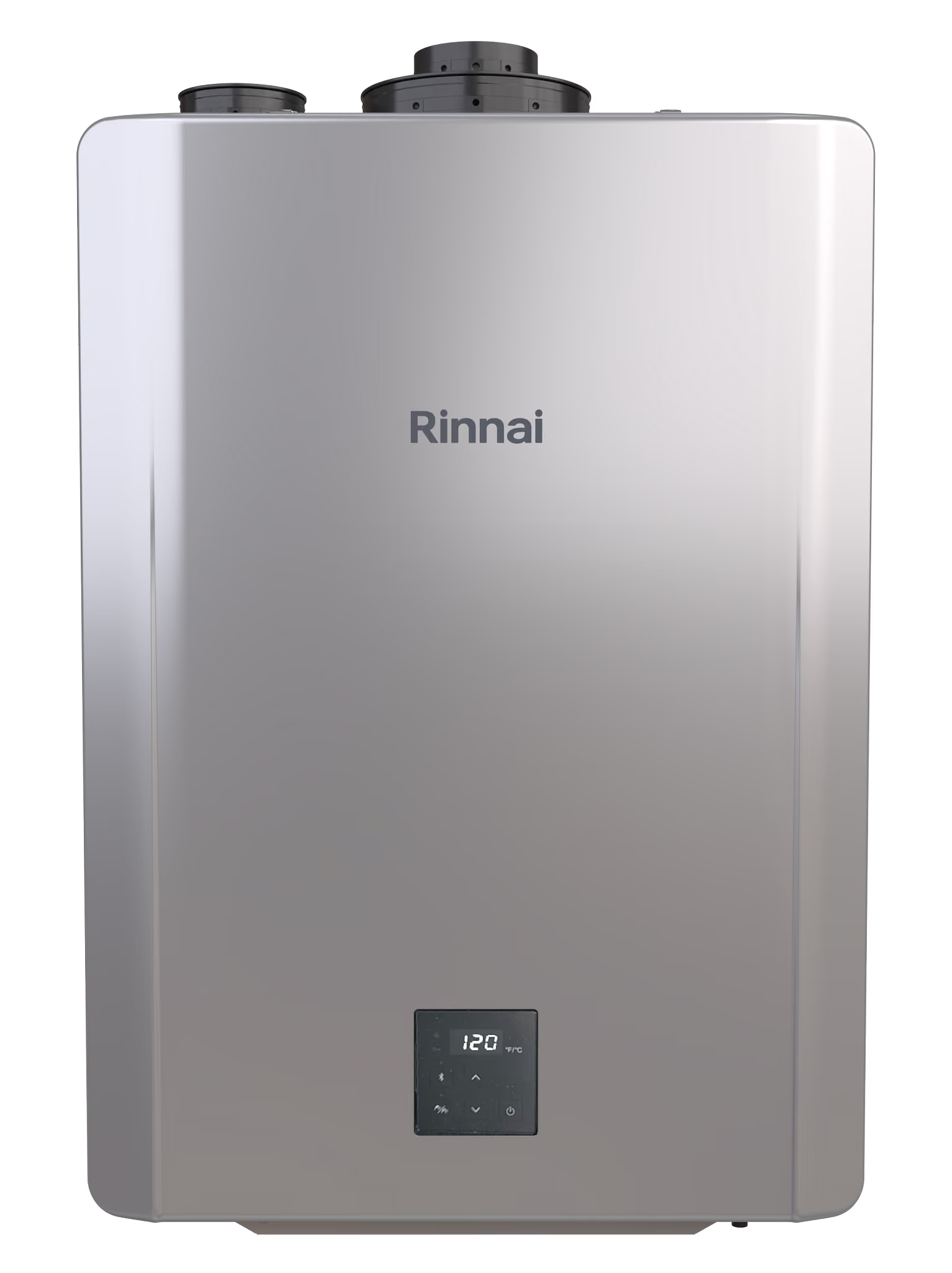
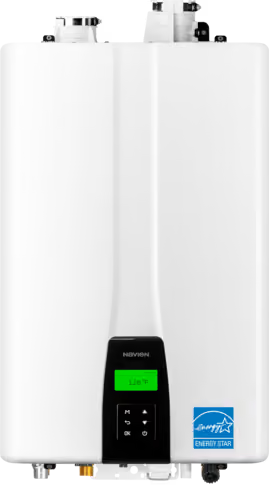
We install Energy Star rated tankless models, gas and electric, from brands including Rinnai and Navien. They mount on a wall, indoors or outdoors, and are backed by leading manufacturer warranties and our 20+ years of quality service.
The model comes after the sizing. Once we know your peak demand and your gas or electrical capacity, we narrow the choice to units that can meet it.
Twenty years is a realistic life for a tankless water heater, but only if it is maintained for Houston’s hard water. The annual flush works like an oil change: it dissolves mineral scale before the scale can damage the heat exchanger.
The flush takes about 90 minutes and costs roughly $195 with us. Skipping it can lead to a $1,000+ heat exchanger replacement in as little as 3 to 4 years.
Each visit is a full diagnostic: we check the burner assembly for sooting, inspect the venting for obstructions (bird nests are more common in Houston than you’d think), clean the inline water filter, verify gas pressure at the manifold and test the temperature output across several fixtures. You get a written report for your records, which helps keep your warranty intact.
Confirm the service address and project with the team. Some areas are subject to an additional travel fee.
It heats water on demand instead of storing it. When you open a hot water tap, cold water flows into the unit, and a gas burner or electric element heats it on the way to the faucet. You get a continuous supply of hot water without a storage tank.
Technically, no. It heats water as you use it, so the supply doesn’t run out. Every unit has a maximum flow, though. If you ask for more hot water than it can handle at once, such as three showers running together, a properly sized unit reduces the flow to keep the temperature steady. You won’t get cold water, but you may notice slightly lower pressure.
Yes. They only heat water when you need it, which reduces energy use and lowers utility bills. On average, they can be 24 to 34% more efficient for homes that use 41 gallons or less of hot water a day.
Installation in Houston ranges from $4,200 to $8,000, including the unit. Factors include the type of heater, how complex the installation is and any upgrades your plumbing, venting or electrical system needs.
Proper venting, a dedicated gas line or enough electrical capacity, and a location protected from freezing. For a gas unit, most Houston homes also need the gas line upgraded from ½-inch to ¾-inch pipe. Professional installation is recommended for safety and performance.
Tell us about your home and your current system. We’ll help you understand the tankless options and the work involved.