Tankless Water Heater Installation & Service in Cypress, TX
Cypress keeps growing. Bridgeland alone added over 1,000 homes last year, and Towne Lake keeps filling in around the waterfront. More homes means more demand on water infrastructure, and the 40-gallon tanks builders drop into these houses were never designed for families running three showers, a dishwasher, and a washing machine at 6:30 AM.
We've been the tankless crew for Northwest Houston since before most of these neighborhoods had streetlights. Our technicians know the gas line specs in Coles Crossing, the attic access points in Blackhorse Ranch, and which Fairfield floor plans need a recirculation loop to get hot water to the master bath in under 5 seconds. If you live in Cypress and you're tired of running out of hot water, or tired of paying to keep 50 gallons heated while you're at work, we should talk.
We love Hot Water Guys! Honest and dependable. Same and Carrie are the best!

.webp)
.webp)
.webp)
.webp)
.webp)
.webp)
.webp)
.webp)

Why Cypress Homeowners Are Switching to Tankless
Here's a number that surprises most people: your tank water heater runs 24 hours a day, even when you're asleep, at work, or on vacation. It's reheating the same 40–50 gallons over and over, burning gas to maintain temperature you're not using. Tankless units only fire when you turn on the tap.
For a typical Cypress family of four, that translates to roughly $180–$240 per year in wasted energy. Over the 20+ year lifespan of a tankless unit, that's $3,600–$4,800 back in your pocket, before you even factor in the fact that you won't need to replace the unit halfway through like you would with a tank.
The other thing Cypress homeowners tell us they love: space. A tankless unit mounts on the wall in your garage or utility closet. That 5-foot-tall tank taking up half your garage? Gone. We've had customers in Bridgeland convert their old water heater closet into a pantry.
What We Install and Service
We handle every major tankless brand, but we're not brand-agnostic. We have opinions based on thousands of installations across Houston:
- Rinnai RU199iN: Our go-to for 3+ bathroom homes. 199,000 BTU, built-in recirculation, Wi-Fi module. Most popular in Towne Lake and Bridgeland.
- Navien NPE-240A: Best efficiency rating in its class (0.96 UEF). We recommend this for families watching their gas bill closely.
- Noritz EZ111: Budget-friendly option that still delivers 11.1 GPM. Great for smaller homes in Cypress Mill and Copperfield.
Every installation includes a free gas line assessment. About 40% of Cypress homes need a gas line upgrade to support a tankless unit. We check this on the first visit so there are no surprise costs on installation day.
Our Installation Process
We've done this over 10,000 times. Here's exactly what happens:
- In-home consultation (free): We look at your current setup, measure hot water demand based on fixtures, and check gas line capacity. Takes about 30 minutes.
- Old unit removal: We drain and disconnect your tank, cap the lines, and haul the old unit away, included in every installation.
- Gas line work (if needed): We upsize from 1/2" to 3/4" where required and run a dedicated line to the new unit location.
- Unit mounting and connection: Wall-mounted, plumbed, vented through the roof or sidewall depending on your home's layout.
- System testing: We run every hot water fixture simultaneously to verify flow rate and temperature rise. You watch us do it.
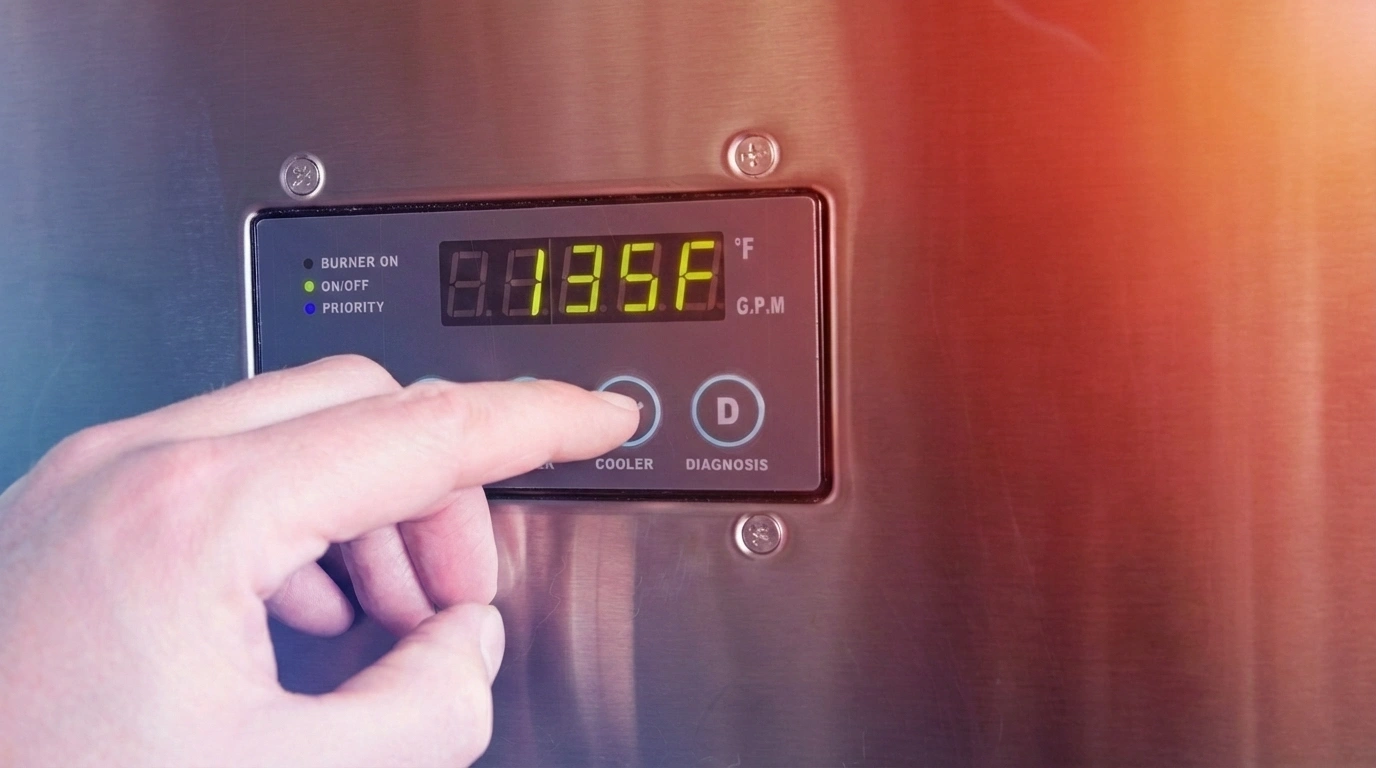
- Walkthrough: We show you how to adjust temperature, read error codes, and when to call us for maintenance.
Most installations take 4–6 hours. You'll have hot water by dinner.
Cypress Water Is Hard: Your Unit Needs Annual Maintenance
Harris County water hardness averages 12–17 grains per gallon in the Cypress area. That's solidly in the "hard" to "very hard" range, and it means calcium and mineral deposits build up inside your tankless heat exchanger every year.
Skip maintenance and you'll notice the signs within 18–24 months: fluctuating temperatures, lower flow, error codes on the display. Skip it long enough and you'll need a $600+ heat exchanger replacement instead of a $195 flush.
Our annual maintenance includes:
- Full vinegar descale of the heat exchanger (45-minute circulation)
- Inlet filter cleaning: the screen that catches sediment before it hits the unit
- Burner and flame rod inspection: making sure ignition is clean and consistent
- Flow rate and temperature testing: we verify output matches manufacturer spec
- Error code history review: your unit logs every fault; we read the history and catch issues early
Maintenance runs $195 flat. No upsells, no "well, while we're here" add-ons. Takes about an hour.
Neighborhoods We Serve Every Week
We have technicians in the Cypress area daily. Here's where we're most active:
- Bridgeland & Towne Lake: Newer construction, 2-story homes, often need recirculation loops added during installation
- Coles Crossing & Fairfield: Established neighborhoods, mostly tank-to-tankless conversions
- Blackhorse Ranch & Canyon Lakes West: Larger lots, sometimes exterior-mounted units work best
- Copperfield & Cypress Mill: Older homes where gas line upgrades are more common
- Cypress Creek Lakes & Marvida: Growing communities where builders installed tanks and homeowners want better
We also serve Gleannloch Forest, Lakewood Glen, Rock Creek, Dunham Pointe, and everywhere in between. If your zip code starts with 77429 or 77433, we're your crew.
Tankless vs. Tank: The Real Math
We install both. We're not trying to sell you something you don't need. Here's the honest comparison:
| Factor | Tank Water Heater | Tankless Water Heater |
|---|---|---|
| Upfront Cost | $2,200–$3,500 installed | $4,200–$6,500 installed |
| Monthly Energy | $35–$55/month | $18–$32/month |
| Lifespan | 8–12 years | 20+ years |
| Maintenance | Minimal (but shorter life) | $195/year (but much longer life) |
| Hot Water | Runs out after 40–50 gallons | Never runs out |
| 20-Year Total Cost | $10,800–$17,500 (2 units) | $8,100–$12,400 (1 unit + maintenance) |
For most Cypress families, tankless wins on total cost of ownership by year 8–10. But if you're in a smaller home with 1–2 bathrooms and don't mind the space, a quality tank heater is still a solid choice, and we'll tell you that.
FAQs From Cypress Homeowners
Will a single tankless unit handle my 4-bedroom in Towne Lake?
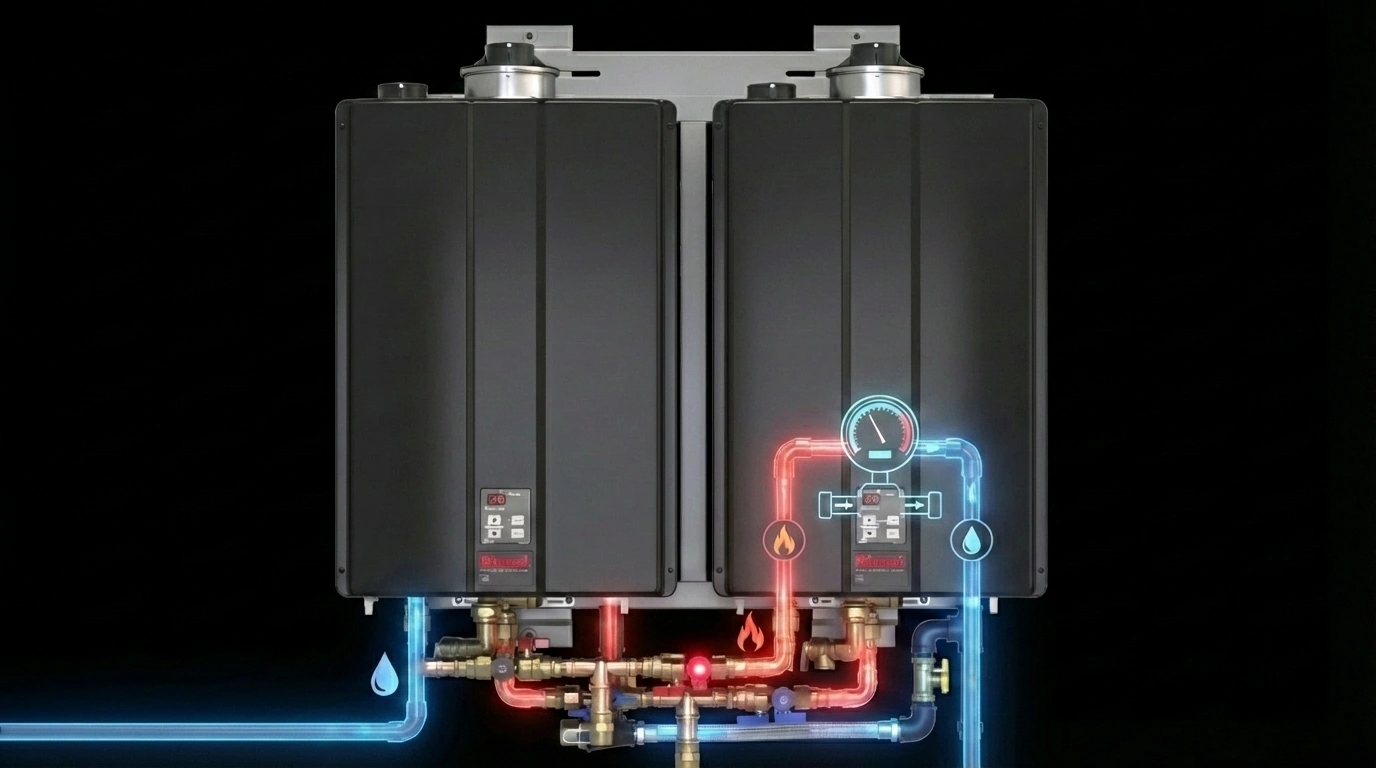
Usually yes, if we size it right. A 199,000 BTU gas unit like the Rinnai RU199 delivers 11+ GPM: enough for 3 showers and a dishwasher running simultaneously. For homes over 4,000 sq ft with 4+ bathrooms, we sometimes recommend two units in a manifold configuration.
What happens during a freeze?
Every unit we install has built-in freeze protection that activates automatically. As long as your unit stays connected to power and gas, it cycles the burner to prevent damage. We also insulate exposed water lines during installation as an added precaution.
How long does installation take?
A straightforward tank-to-tankless conversion takes 4–6 hours. If we need to run a new gas line or relocate the unit, add 2–3 hours. We schedule morning appointments so you can get hot water restored quickly.
Do you offer financing?
Yes. We offer 0% APR for 18 months through our financing partner. Most customers' monthly payment is less than what they were spending on the higher energy bills from their old tank.
Book Your Free Consultation
Whether you're in Bridgeland, Towne Lake, Fairfield, or anywhere in Cypress, we'll come to you, assess your home, and give you a straight answer on what you need and what it costs. No pressure, no upsells.
Call us at (832) 673-0909 or book online. Appointments available.
Water Heater Repair in Cypress
Searching for water heater repair near me in Cypress? Repairs start at $165 with a free over-the-phone estimate first. From Bridgeland and Towne Lake to Coles Crossing and Fairfield, our technicians carry OEM parts and give you a straight answer on whether a repair makes sense or the unit is done: honest numbers either way, backed by 20+ years in the trade and 1,400+ five-star reviews. Call 832-673-0909.
Greater Houston
Neighborhoods We Serve
Zip Codes Covered
Services we offer

Request your free quote.
.webp)
any questions?
We install whole house water filtration systems throughout the Greater Houston area including Houston, Katy, Cypress, Sugar Land, Spring, Tomball, The Woodlands, Conroe, Magnolia, Montgomery, Willis, Splendora, Cleveland, Bellaire, Missouri City, Richmond, Jersey Village, Brookshire, and surrounding areas in Fort Bend, Waller, Montgomery, Liberty, Brazoria, and Galveston counties. If you're unsure whether we serve your area, give us a call at 832-673-0909.
Houston tap water meets EPA minimum safety standards, but "meets minimum standards" and "ideal for your family" are two different things. The city uses chloramine to disinfect the supply, which leaves a chemical taste and creates disinfection byproducts. Houston's water is also hard, typically ranging from 8 to 15 grains per gallon. And in some areas -particularly near the San Jacinto River- PFAS "forever chemicals" have been detected at concerning levels. While the water won't make you sick overnight, many homeowners choose filtration to reduce long-term chemical exposure and improve everyday water quality.
Most whole house water filtration installations take 2 to 4 hours depending on your system type and plumbing configuration. We install at the main water line before any branch lines so your entire home is protected. Every installation includes a bypass valve for easy future maintenance, and all connections are done with code-compliant fittings. Our team handles everything- you don't need to call a separate plumber.
They solve different problems. A water softener removes hard water minerals like calcium and magnesium that cause white scale buildup on fixtures, dry skin, and damage to appliances like your tankless water heater. A water filter removes chemicals, sediment, and contaminants like chloramine and VOCs that affect taste, odor, and safety. Most Houston homes benefit from both since our water is both hard and chemically treated. Hot Water Guys installs combo systems that handle everything in one setup.
A whole house water filtration system installs at your main water line and filters all the water entering your home before it reaches any fixture. That means every faucet, shower, washing machine, dishwasher, and ice maker receives treated water- not just the kitchen tap. Depending on the system type, it can remove chlorine, chloramine, sediment, VOCs, hard water minerals, and even PFAS "forever chemicals" that have been detected in some Houston-area water supplies.
Yes. We provide tankless water heater repair in Houston, TX for all major brands. Common tankless repairs include error code diagnostics, heat exchanger descaling, flow sensor replacement, gas valve repair, and ignition system service. Visit our tankless water heater repair page for more details.
We repair all major water heater brands in Houston, including Rinnai, Navien, Noritz, Rheem, A.O. Smith, Bradford White, and State. Our technicians carry OEM parts and have brand-specific diagnostic tools for fast, accurate repairs.
You should repair your water heater if it is under 8 years old and the repair cost is less than 50% of a new installation. Replace it if the tank is leaking, the unit is over 10 years old with repeated failures, or you see rust-colored water from the hot tap. Hot Water Guys gives you both options with upfront pricing so you can decide.
You should flush a tank water heater at least once per year in Houston. The area's hard water causes sediment to build up faster than in other regions. For tankless systems, a descaling flush every 12 to 18 months keeps the heat exchanger clean and prevents error codes.
Yes. Hot Water Guys provides water heater repair across Houston and nearby areas including Sugar Land, Katy, Tomball, Spring, Cypress, and Conroe. Call 832-673-0909 and we will schedule a technician to your home as quickly as possible.
Signs you need water heater repair include no hot water, inconsistent temperature, water that takes too long to heat, discolored or rusty hot water, unusual sounds like popping or rumbling, visible leaks, and error codes on the display panel. If you notice any of these, call for a diagnostic before the problem gets worse.
Water heater repair in Houston typically costs between $165 and $1,200 depending on the type of system and the specific component that failed. Simple fixes like a thermocouple replacement run $100 to $200, while more involved repairs like a gas valve or heat exchanger replacement cost more. Hot Water Guys provides a free estimate before starting any work.
If your tank is under 8 years old and the repair cost is less than 50% of a new installation, repair is almost always the better financial decision. However, if the actual tank is leaking (not a fitting or valve), the unit is 10+ years old with multiple component failures, or you're seeing rust-colored water from the hot tap, replacement is the smarter move. We'll show you the numbers for both options so you can make an informed decision. We never pressure homeowners into replacements.
A standard tank water heater in Houston typically lasts 8 to 12 years. Houston's hard water accelerates sediment buildup and anode rod depletion, which shortens lifespan compared to the national average. Annual sediment flushing and anode rod replacement every 3-4 years are the two most effective ways to maximize your tank's life. If your tank is over 10 years old and showing signs of corrosion or frequent issues, it may be time to consider a replacement.
The most common causes are ignition failure (often a corroded flame rod or gas supply issue), a tripped error code that has locked the unit out, or severe scale buildup blocking the heat exchanger. Other possibilities include a failed flow sensor that doesn't detect water demand, electrical issues, or venting blockages. Our technicians systematically test each component to identify the exact cause rather than guessing.
If your tankless unit is under 10 years old and the repair cost is less than 50% of a replacement, repair is almost always the better investment. Tankless systems are designed to last 20+ years, so a mid-life repair typically delivers excellent return. If your unit is 15+ years old with a major component failure (like a cracked heat exchanger), replacement may make more financial sense. We'll walk you through the math honestly- we never pressure customers into replacements.
Yes. Hot Water Guys is factory-authorized to service Rinnai, Navien, Noritz, Takagi, and Rheem tankless systems. We carry the most common OEM parts on every truck and have direct relationships with manufacturer technical support teams for complex cases. Being factory-authorized also means we can process warranty claims that general plumbers cannot.
Tankless water heater repair costs in Houston typically range from $150 to $600 depending on the issue. Common repairs include flame rod cleaning ($100–$175), heat exchanger descaling ($195–$250), ignition and gas valve repairs ($200–$450), and control board replacement ($300–$600). Our flat diagnostic fee is applied to the repair cost if you choose to move forward with the fix.
Error codes are your tankless unit's built-in diagnostic system. Each brand uses different codes: Rinnai uses numeric codes (like 11 for ignition failure), Navien uses E-codes (like E003 for ignition), and Noritz uses two-digit codes. Rather than just clearing the code and hoping it doesn't return, our technicians trace the error to the specific failed component -whether it's a flame rod, gas valve, flow sensor, or control board- and repair the root cause.
A full tank water heater replacement in Houston typically ranges from $2,500 to $4,500, depending on the tank size, fuel type (gas or electric), and any code-required upgrades like expansion tanks, new venting, or drip pans. Hot Water Guys provides transparent over-the-phone estimates so you know what to expect before we arrive.
In Houston, natural gas water heaters are more popular because gas is relatively inexpensive and heats water faster than electric models. However, electric tanks are a great option if your home doesn't have a gas line or if you prefer lower upfront installation costs. Gas tanks typically cost slightly more to install due to venting requirements but deliver lower monthly operating costs. We'll evaluate your home's existing infrastructure and help you choose the most cost-effective option.
A standard tank-to-tank replacement typically takes 2 to 4 hours. This includes draining and removing the old unit, setting the new tank, connecting water and gas or electrical lines, and performing a full safety inspection. If code upgrades are needed -such as adding a drip pan, expansion tank, or updating the venting- the job may take an additional 1-2 hours.
For most Houston households, a 40-gallon tank suits 1-2 people, a 50-gallon tank works for 3-4 people, and a 75-gallon or larger tank is recommended for families of 5 or more. Your actual needs depend on peak-hour demand: how many showers, appliances, and faucets run simultaneously during your busiest hour. Our technicians calculate your specific First Hour Rating (FHR) during the site visit to recommend the right size.
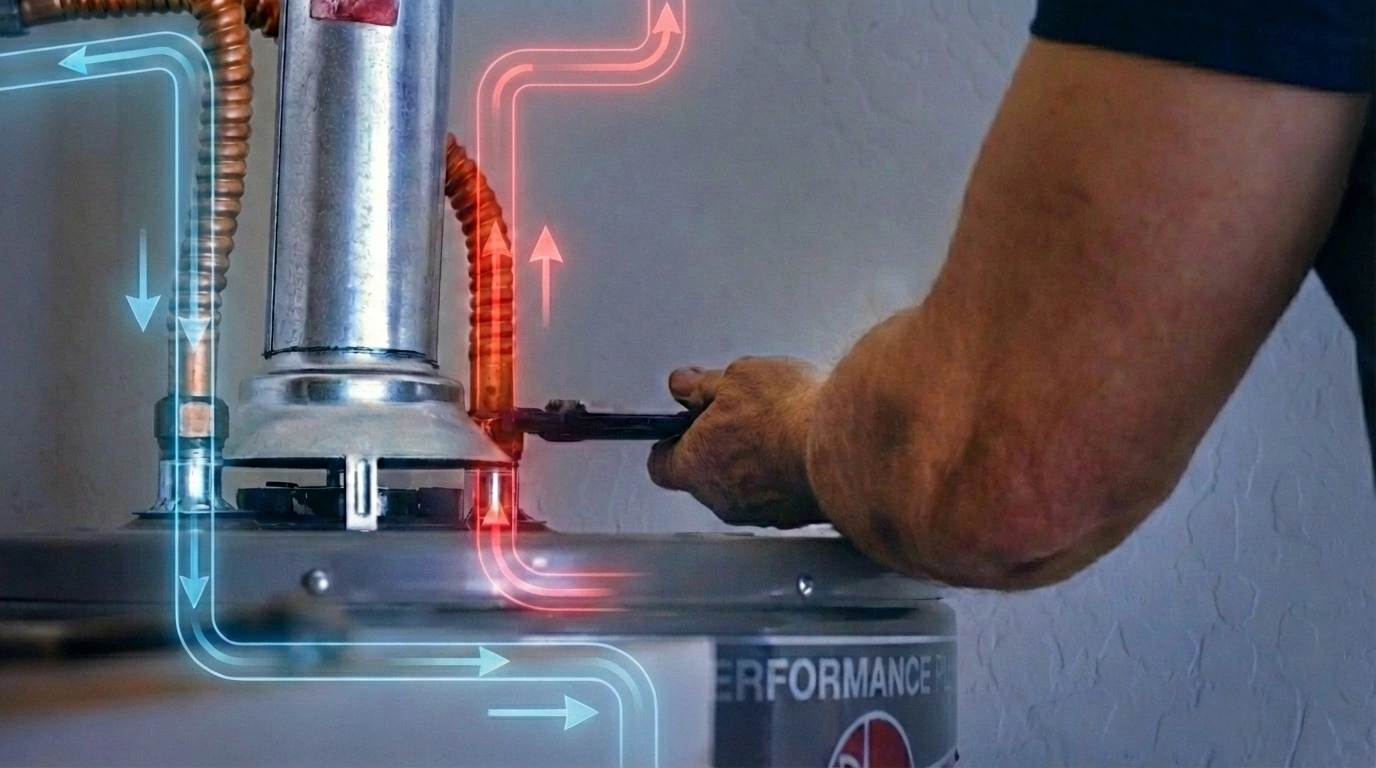
Regular maintenance, such as flushing the tank to remove sediment, inspecting the anode rod, and checking the pressure relief valve, can help prevent future issues. For tankless water heaters, descaling and regular servicing are essential.
The cost of repairing a water heater can vary depending on the nature of the issue, the type of water heater, and the extent of the repair. On average, repairs can range from $250 to $1200. More complex issues may cost more.
Yes, both tankless and traditional water heaters can be repaired. However, the type of repair will depend on the specific issue and the type of water heater. Professional technicians are trained to handle repairs for both types of systems.
Signs that your water heater needs repair include a lack of hot water, water taking too long to heat, water discoloration, reduced water flow, and unusual noises. Any of these issues should be addressed promptly to avoid further damage.
Common issues include no hot water, inconsistent water temperature, leaks, strange noises, and error codes. These problems can affect both tankless and traditional water heaters and require professional repair.
Regular maintenance can significantly extend the lifespan of your tankless water heater by preventing issues that could lead to costly repairs or system failure. It ensures the unit operates efficiently and reliably over its lifespan.
Signs include inconsistent water temperature, reduced water flow, strange noises, or error codes displayed on the unit. These symptoms indicate potential issues that require professional attention.
While some basic maintenance tasks like cleaning the air filter can be done by homeowners, it’s best to have a professional perform thorough maintenance to ensure all components are properly inspected and serviced.
Maintenance typically includes descaling to remove mineral buildup, cleaning the air filter, checking the burner or heating element, and inspecting the venting system. Regular checks ensure that all components are functioning correctly.
It is recommended by Manufacturers that once yearly maintenance be performed. However incoming water temperatures, frequency of usage and water quality greatly affect how often maintenance needs to be performed. It’s best to let the Service Technician recommend maintenance frequency.
Consider the hot water demand, the number of fixtures, the type of fuel (natural gas, propane, or electric), and the specific requirements of your property. Consulting with a professional can help you determine the best system for your needs.
Commercial tankless water heaters are highly efficient as they only heat water on demand, reducing energy waste. This efficiency translates to significant savings on utility bills, especially for businesses with high hot water usage.
Yes, regular maintenance is crucial for commercial tankless water heaters. This includes descaling, checking the heating elements or burners, and ensuring proper ventilation. Routine maintenance helps prevent breakdowns and extends the system’s lifespan.
Depending on the hot water demand, multiple tankless water heaters can be installed in parallel to meet the needs of large commercial properties. This setup ensures that the system can handle simultaneous usage from multiple fixtures.
Tankless water heaters provide endless hot water, energy savings, and space efficiency, making them ideal for commercial properties with high hot water demand. They also have a longer lifespan compared to traditional water heaters.
The cost to install a tankless water heater in Houston ranges from $4,200 to $8,000, including the unit and installation. Factors affecting the cost include the type of heater, installation complexity, and any necessary upgrades to your home’s plumbing, venting, or electrical systems. Hot Water Guys installations start at $4,200 with a free over-the-phone estimate.
Tankless water heaters require proper venting, a dedicated gas line or sufficient electrical capacity, and a location that prevents freezing. Professional installation is recommended to ensure safety and optimal performance.
Technically, no. Tankless heaters heat water on demand, providing an endless supply. However, every unit has a maximum flow capacity. If you demand more hot water than the unit can handle at once (e.g., running three showers simultaneously), a properly sized tankless heater will automatically reduce the water flow to ensure the temperature remains consistent. You won't get cold water, but you may notice slightly lower water pressure.
Yes, tankless water heaters are more energy-efficient than traditional tank water heaters. They only heat water when needed, reducing energy consumption and lowering utility bills. On average, they can be 24-34% more efficient for homes that use 41 gallons or less of hot water daily.
A tankless water heater heats water on demand rather than storing it in a tank. When you turn on a hot water tap, cold water flows into the unit and is heated by a gas burner or electric element before being delivered to the faucet. This process provides a continuous supply of hot water without the need for a storage tank.


